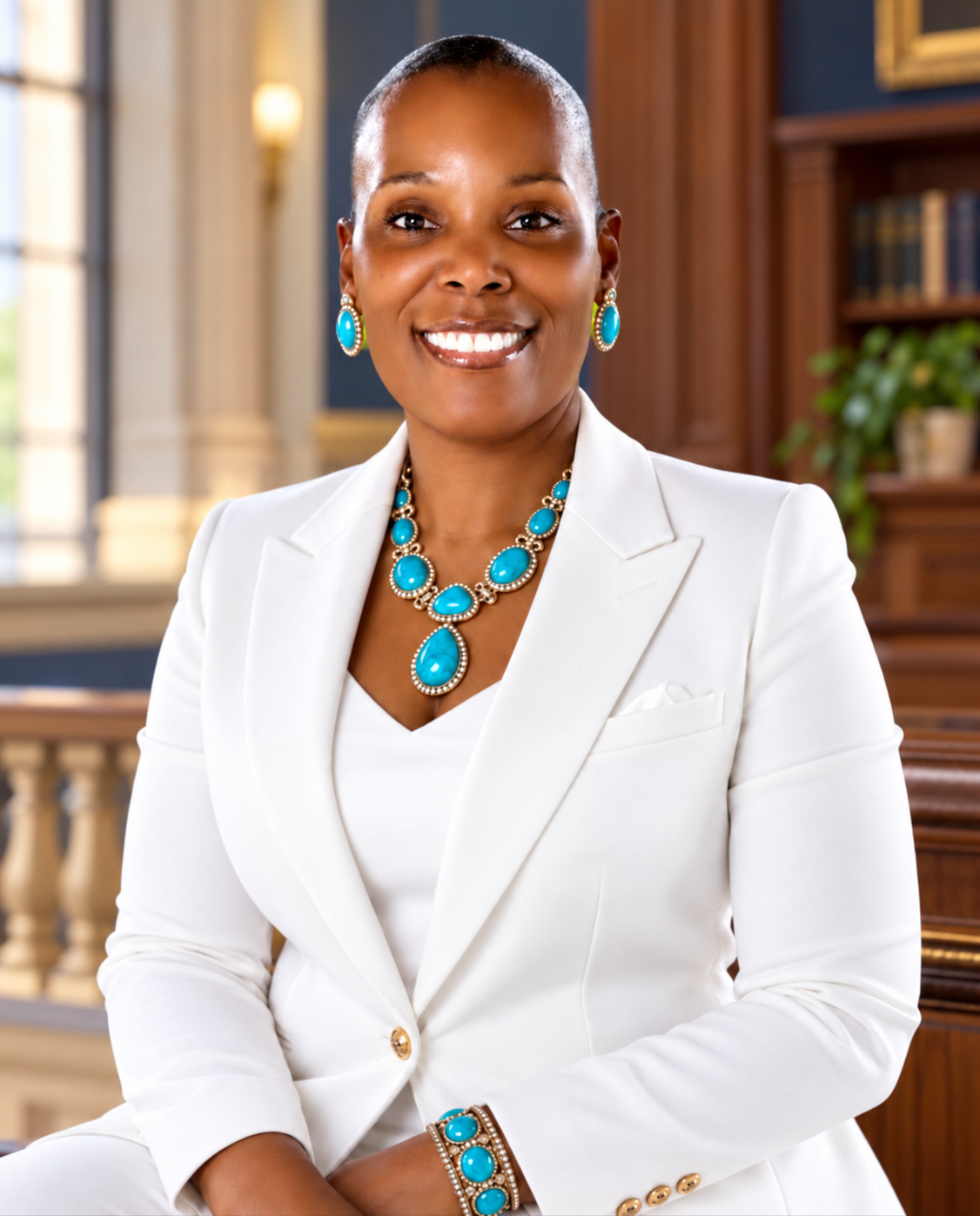
Every community has people whose work is measured not only in what they build, but in who gets to grow because they built it. In Laurel, Mississippi, Amanda Cooley’s story begins with reading, continues in a school made possible by neighbors, and carries forward the example of a mother whose teaching reached across generations.
There is a particular kind of hope in a classroom: a child opening a book, sounding out a word, and discovering that something difficult can become possible with patience and care. For Amanda, that lesson reaches back to the steps of her childhood home. In a 2026 interview with WDAM, Cooley recalled her grandmother teaching her to read there when she was four. She remembered repeating words after her grandmother, who was busy with the work of the day but still made time for that lesson.
That early memory now sits alongside a much larger effort. Cooley founded Unlimited Dreams Christian Learning Center in Laurel in 2020, during the pandemic. Local reporting describes the school as a tuition-free, nonprofit Christian learning center serving students from kindergarten through grade 12. Its purpose grew from a concern that children were reaching upper elementary grades without strong reading skills, and from a belief that consistent attention could change that path.
A school built with Laurel
The school’s story is also a story about what can happen when a community decides to help a local idea take root. After operating in several locations, Cooley found a more permanent home in the historic Old Glory House on North Second Avenue. In 2024, local reporting described the renovated building as a learning center with classrooms, a library, a quiet room, kitchen and cafeteria, and fenced outdoor play space. Cooley said the community’s response helped cover renovation needs in a matter of days.
That work received a wider audience when the school’s renovation appeared on HGTV’s Home Town. The television moment was memorable, but the more enduring accomplishment is practical: a building adapted for students and teachers, and a school community with room to keep doing its work.

In August 2026, WDAM reported that Unlimited Dreams was beginning its seventh school year. Cooley described comprehension and literacy as priorities, and several seniors interviewed had been at the school for multiple years. The report also described a planned Keys Success Center, intended as a resource for students and families. It is an example of how the school’s ambitions reach beyond a classroom lesson toward practical support for the wider neighborhood.
Her mother’s example
For Cooley, the school was never only a business idea. Her mother, Brendalyn “Keys” Campbell, was part of the work. WDAM reported that Campbell taught in the Jones County School District for 54 years before retiring and later returning to help her daughter at Unlimited Dreams. A separate WLBT remembrance reported 49 years across the Jones County and Laurel school districts. The accounts differ in how they describe the length of her career; both portray a life devoted to students and colleagues.
When Campbell died in August 2025, former students and coworkers spoke of a teacher who encouraged people, loved children, and kept a positive spirit. One former student described her as a steady source of strength. A fellow educator remembered being taken under her wing. Those memories make the school’s name, Unlimited Dreams, a fitting reminder of the care Campbell offered in classrooms over many years.
That legacy continues in Cooley’s work on literacy. In 2026, she began a read-along channel called Reading with Mrs. Amanda, aimed at helping parents support children’s reading. WDAM reported that her goal was to begin in the Pine Belt and grow outward. It is a modest, direct idea: make a book available, read together, and help a child build confidence one page at a time.
A family behind the work
Public reporting and the photographs shared for this profile show that the work has been surrounded by family. Cooley’s husband, Randall, appears beside her at a school celebration and joined relatives and friends when they watched the school’s renovation appear on television. The family describes him as one of her strongest supporters. That kind of support often happens away from cameras: helping a person keep moving when the work is demanding and the next step is not yet clear.
Cooley’s father, Charles Freeman Campbell, is remembered in family details shared for this profile as a well-known presence in the community. The family says he worked at Georgia-Pacific, coached the Hoy Royals in Little League baseball and football, and was known as a “community dad.” They also shared that he was bedridden for much of Amanda’s life but continued to offer the guidance she needed as she grew into adulthood. These details come from the family and have not been independently verified for this profile.

Family support is part of the story, but education remains its center. The school, the reading channel, and the lessons passed from one generation to another all point toward children and the possibilities they can build for themselves. The family photographs offer a glimpse of the people who share in that everyday commitment.

The children pictured here are part of the family life behind the school’s work. Their image is kept in full and displayed at a smaller size so it sits comfortably within the article. The story returns to the same idea that runs through Cooley’s work: patient guidance, strong family ties, and room for young people to learn and grow.
What a legacy asks of a community
A teacher’s influence rarely ends at the classroom door. It can live in the adult who remembers being encouraged, in the neighbor who contributes to a school renovation, in the parent who reads one more page with a child, and in the daughter who carries her mother’s lessons into a new generation.
Amanda Cooley’s story brings those threads together: a childhood reading lesson, a mother’s decades of service, a father’s guidance, a husband’s support, and a school built around the belief that children deserve the chance to learn. It is a story rooted in Laurel. It raises questions that belong to all of us: What do we want our children to inherit from this community? Where can we make learning easier to reach? What local work deserves more attention?
Those questions do not have to end with one person or one school. They invite Laurel’s residents to think about the neighbors, educators, families, and institutions helping the next generation thrive. What do you believe Laurel needs more of, and where do you see people already doing that work?
Laurel’s next chapter
Every community has room to keep learning, growing, and caring for one another. What do you think Laurel should build next?
Sources and review notes
- WDAM, “Donations make dream school come true in Laurel” (July 17, 2024): school origin, tuition-free model, building and community support. WHLT reporting republished by Yahoo describes it as an accredited K-12 school.
- WDAM, “Long-time Jones County educator passes away” (Aug. 16, 2025): Campbell’s 54 years in Jones County and return to help at the school.
- WLBT, “She will be missed” (Aug. 20, 2025): remembrances and a separate 49-year account spanning Jones and Laurel districts.
- WDAM, “Unlimited Dreams owner starting new channel to help kids improve literacy” (May 3, 2026): Cooley’s reading channel and childhood reading story.
- WDAM, “Unlimited Dreams Christian Learning Center starts 7th school year” (Aug. 17, 2026): current school-year priorities, seniors’ experience, and the announced Keys Success Center.
- WTOK, “Laurel school featured on HGTV’s ‘Home Town’” (Jan. 5, 2025): the school’s television feature and family gathering.
- Information about Charles Freeman Campbell’s employment, coaching, and family role, and Randall Cooley’s support, was provided by the family.