Sunday Morning News Report
Badger Answers His Critics
Accountability, power and the people: John Robert Badger responds to questions from supporters and skeptics about his record, leadership and 2028 presidential campaign.
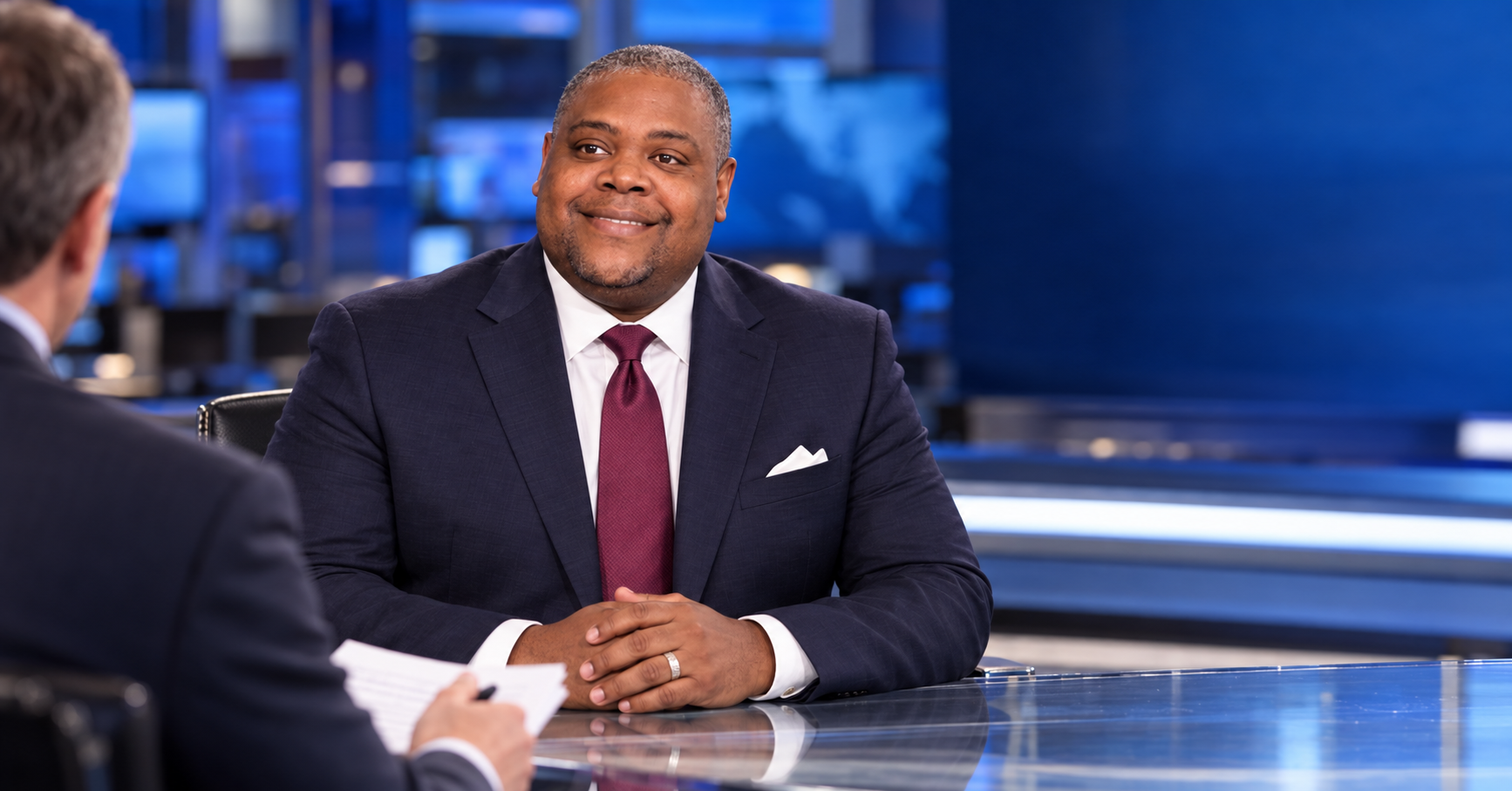
Editorial disclosure: T. Douglas is a Washington, D.C., based independent news editor. He is not employed by, affiliated with or working for the John Robert Badger campaign. He approached the campaign independently and presented questions arising from public discussion among supporters, undecided voters and critics. The interview is being published by the John Robert Badger Newsroom with responses edited only for clarity and organization, without changing the candidate's stated positions.
WASHINGTON, D.C.
John Robert Badger says criticism of his confrontational approach to political accountability does not discourage him. He argues that principled cooperation requires scrutiny, constitutional discipline and an unwillingness to conceal misconduct.
In an independently conducted interview, Douglas pressed the 2028 presidential candidate on whether his public criticism of politicians could isolate him in Washington, damage his professional relationships or cause voters to view him as aggressive. Badger also addressed federal law enforcement reform, his support for candidates across the country, wages, civic power, Mississippi politics and his future participation in Louisiana elections.
Critics say calling out politicians is damaging your reputation and could make public officials unwilling to work with you in Washington. How do you respond?
Badger: If a commitment to accountability discourages unethical officials from approaching me, I consider that a form of discernment, not a political loss. Ethical public servants do not fear scrutiny. They understand that cooperation is a shared obligation to the Constitution and the people, not an agreement to conceal misconduct. My administration would welcome principled disagreement, but it would never make peace with corruption.
Some people say your public positions could discourage attorneys and other professionals from working with your company. Does that concern you?
Badger: No. I do not want an attorney, judge or other professional to engage my company for the purpose of obscuring misconduct or sanitizing harm done to another person. I want colleagues whose records demonstrate integrity. When serious ethical concerns arise, I will decline or end the relationship and respond through lawful, appropriate channels. Professional loyalty must never become complicity. My obligation is to people who may lack the resources or specialized knowledge to recognize that power is being misused against them.
You often say you would take a broom and dustpan to Washington. What does that mean in practical terms?
Badger: It means a disciplined review of institutions, leadership, performance and public spending. Wrongdoing must be investigated by the bodies legally empowered to do so, with evidence, due process and constitutional safeguards. If an agency fails its lawful mission, I would pursue oversight, leadership changes, funding conditions and, when necessary, restructuring through Congress. Reform cannot be reduced to vengeance. It must be lawful, measurable and durable.
You have specifically criticized the FBI. Would you abolish or defund it?
Badger: No federal institution should receive unquestioned funding simply because it has existed for generations. If the FBI or any other agency failed to address substantiated misconduct, I would demand inspector general review, congressional oversight and enforceable performance standards. Any change in funding or structure must follow the law and preserve essential public safety functions. The objective is not institutional chaos. The objective is an institution worthy of the public trust.
What would you say to officials or employees who might challenge those reforms in court?
Badger: They have the right to pursue lawful remedies, and my administration would respect the authority of the courts. I am prepared to defend every lawful action with evidence and constitutional reasoning. I will not retreat merely because opposition is loud. Once a lawful course is established, I intend to stand firmly upon it.
You have supported candidates in several cities and states. Why become involved in races beyond your own?
Badger: A nation cannot be renewed by one individual. I do not consider myself a king, and I never will. America is not built around a throne. It is sustained by millions of people whose dignity and civic authority matter. I sometimes describe every man and woman as a prince or princess because leadership should elevate people, not diminish them. When I support a candidate, it should be because the record suggests that person will confront misconduct, protect constituents and serve with integrity, not because of friendship or political convenience.
How do you respond to people who dislike the memes and forceful messages you post online?
Badger: They have every right to reject my approach and to express that judgment at the ballot box. My responsibility is to make certain that power is examined whether I hold office or not. Humor and sharp commentary may attract attention, but the substance must always return to evidence, constitutional rights and public accountability. Democratic change belongs at the polls, in the courts, through lawful oversight and through peaceful civic action.
Why was Johnny DuPree not your preferred candidate in Mississippi Senate District 34?
Badger: I reviewed the public record because prior executive experience deserves serious consideration. After that review, I was not persuaded that he represented the standard of accountability I was seeking. That is a political judgment, not a declaration of criminal guilt. Every candidate should be examined through the same process: review the record, ask difficult questions, allow a response and then decide whom the public interest is best served by supporting.
You have criticized established civil rights and political organizations for being unavailable when people seek help. What standard do you expect?
Badger: Community advocates have contacted us after other channels failed to respond. I have personally reached out during holidays when an urgent matter demanded attention. Public servants and organizational leaders are human and need time with their families, but they also need dependable escalation systems so vulnerable people are not abandoned. An institution that claims to protect the public must ensure that someone answers when the public is in danger. Responsibility cannot disappear because the calendar says it is a holiday.
Some observers say you are trying to bring other people upward as your own national profile grows. Is that intentional?
Badger: Yes. No meaningful national renewal can be built around one personality. The government should not shout over the people. It should listen, respond and remain constrained by the Constitution. I want to help principled people find the confidence, resources and platform to serve. Leadership is not a ladder that one person pulls up behind him. It is a structure strong enough for others to climb.
You argue that government has become too powerful. What would a different balance look like?
Badger: Government must be strong enough to protect rights and perform its lawful duties, yet limited enough to remain answerable to the people. Citizens should be the commanding moral voice of this republic. Elections, courts, oversight, public records, peaceful protest and constitutional petition are the lawful instruments through which people correct government. I also believe working people need an economy in which wages can meet the cost of living. A country cannot call itself prosperous while full-time workers remain trapped in poverty.
Critics describe you as aggressive. Is that a fair characterization?
Badger: Assertiveness is not aggression. I speak directly, I repeat questions when institutions refuse to answer, and I remain persistent until credible concerns receive a lawful response. I do not endorse violence or intimidation. My method is documentation, speech, litigation where appropriate, peaceful advocacy and the ballot. Some people mistake firmness for hostility because they are accustomed to public pressure disappearing. Mine will not disappear simply because accountability is uncomfortable.
You have spoken about an arrest connected to public protest in Monroe. How does that experience influence your campaign?
Badger: I maintain that my constitutional rights were violated, and I intend to pursue the lawful remedies available to me. That is my allegation and must not be confused with a final judicial finding. The experience strengthened my conviction that constitutional protections must have practical force in every city and state. When state or local action conflicts with the United States Constitution or valid federal law, the Supremacy Clause matters. No public official should treat constitutional rights as optional.
Will you participate in elections in northeastern Louisiana even though you no longer live in Monroe?
Badger: Yes, where I am legally eligible to vote. I am from Monroe and remain a Louisiana resident, though I do not disclose my private residence publicly. I intend to examine candidates in the district attorney, judicial, legislative, gubernatorial and presidential races that affect my community. Voting is not separate from having a voice. It is one of the first responsibilities that gives that voice democratic force.
A closing commitment
Badger closed the discussion by rejecting the idea that public leadership should be measured by proximity to wealth or established power.
“I am not asking the people to surrender their judgment to me,” he said. “I am asking them to examine my record, question my proposals and vote. I will always consider myself part of ‘We the People.’ My voice begins with my vote, and so does theirs.”
Constitutional context
Public readership poll
Would you support John Robert Badger for president in 2028?
This is a voluntary campaign readership poll, not a scientific public opinion survey. Only responses reviewed and approved by the campaign are included in the public totals.
Personal information is submitted on a separate page and is never displayed publicly.
Right of response and correction policy: Any person or organization identified in this interview may submit a documented response or factual correction for editorial review. A candidate's characterization of disputed events is identified as his account and is not presented as an adjudicated fact.
Return to the campaign newsroom